


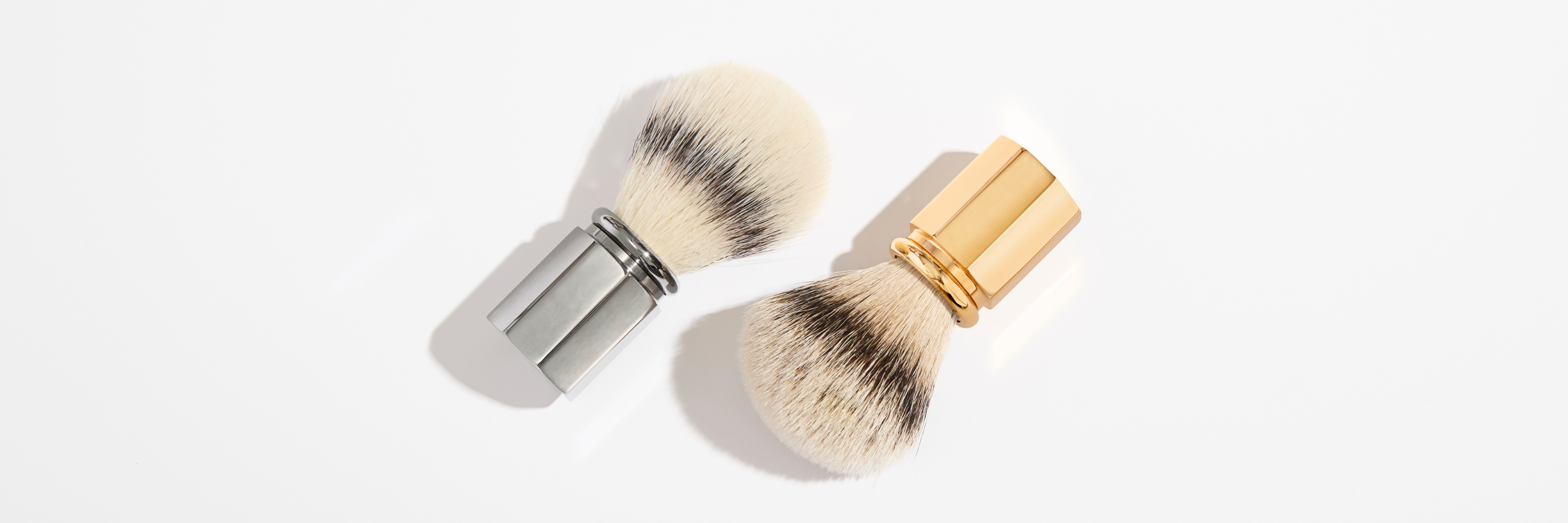
Genuine Badger Shaving Brushes
Newsletter
Sign up to be the first to hear about our latest product launches, exclusive offers and news from the Maison.
FAQ – Shaving Brushes
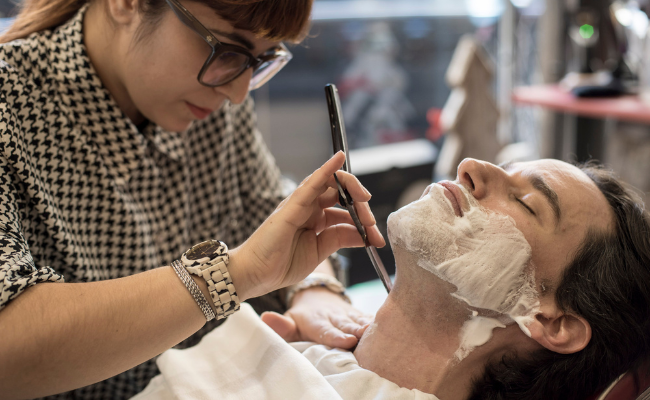
The shaving brush prepares the skin and hair before the blade passes. By mixing water with soap or shaving cream, it creates a rich, creamy lather that helps the razor glide.
When applying it, it also helps lift the hairs and gently exfoliate the skin, for a more precise and comfortable shave.
The result: the blade glides better, irritation is reduced, and shaving is more enjoyable.
Whether you use a soap or a shaving cream, the brush is the essential accessory to fully enjoy the benefits of traditional shaving.
It is difficult to give a precise lifespan for a shaving brush, as it depends on several factors: frequency of use, the soap or shaving cream used, and how well it is maintained.
Soap that is too acidic can, over time, weaken the bristles, while a brush left in a damp environment or poorly dried will wear out faster. Conversely, a brush rinsed thoroughly after each shave and left to air dry will retain its qualities for many years.
With proper care and normal use, a quality brush can accompany you for a very long time.
Caring for a shaving brush is essential to preserve its softness and longevity.
After each use, it is important to rinse it thoroughly with warm water to remove any soap or cream residue. Then gently wring it out without pulling on the bristles, and let it air dry, ideally head-down on a suitable stand.
It is also recommended to avoid prolonged damp environments and not to use overly harsh products or overly acidic soaps, which could weaken the bristles over time.
Proper care, combined with regular but careful use, keeps a brush in excellent condition for many years.
To choose the right shaving brush, you should first consider your skin type and sensitivity.
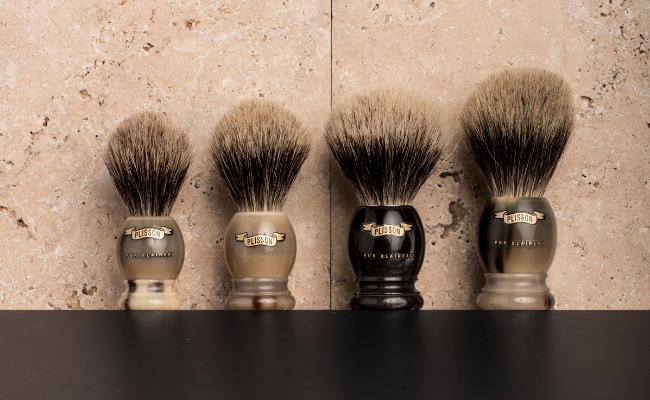
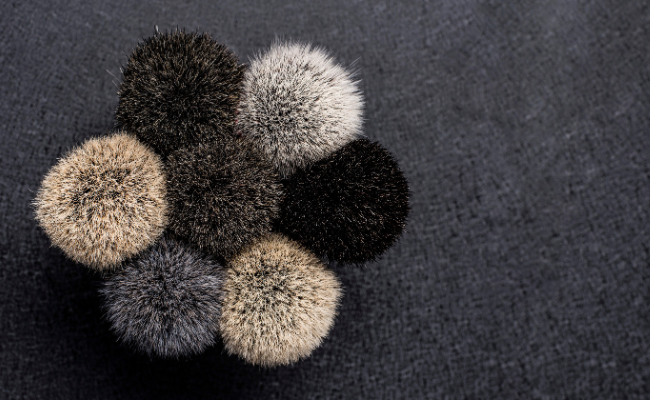
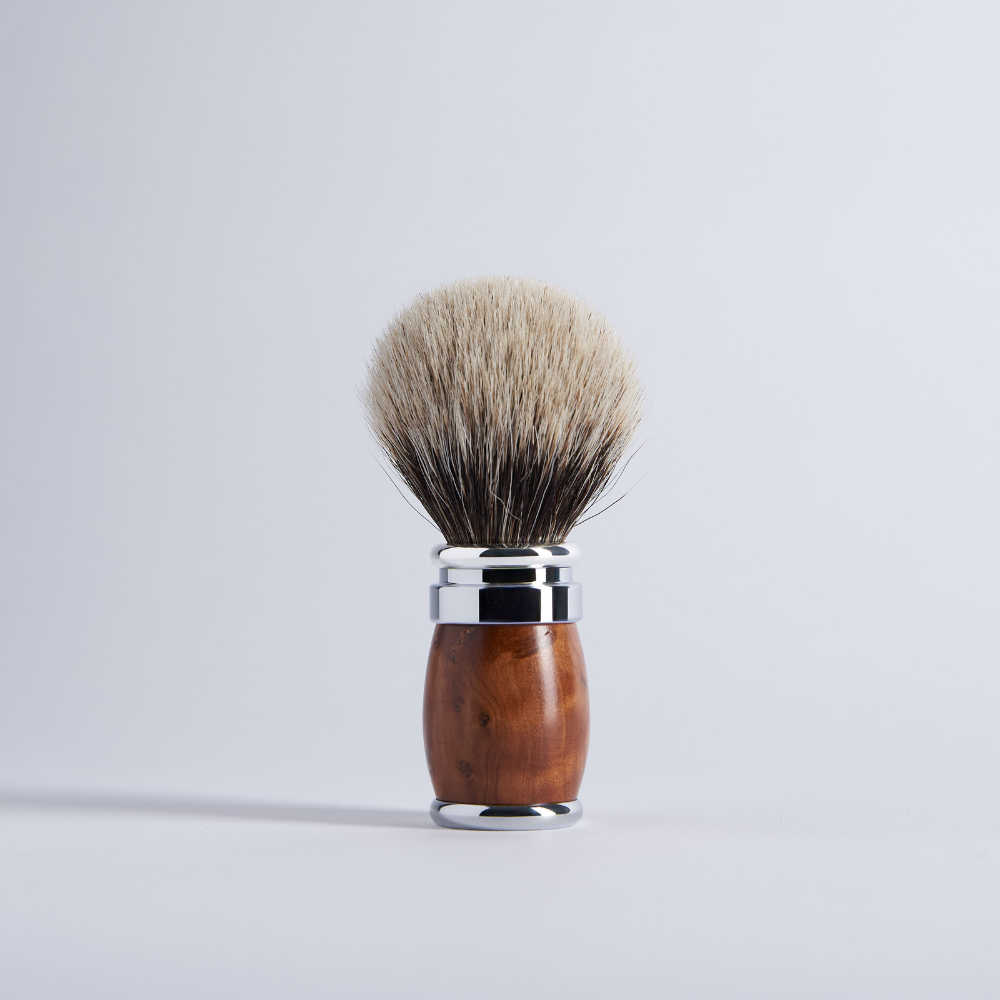
In general, darker bristles offer a slightly firmer contact and a more invigorating exfoliation, which may suit normal to resilient skin. Conversely, lighter bristles are softer to the touch and therefore better suited to sensitive skin or those seeking a very comfortable shave.
The choice also depends on your personal preference: some prefer a more energetic sensation on the skin, others favor softness.
At Plisson 1808, different qualities of bristles and fibers are offered to suit all profiles and shaving habits.
The main difference between a synthetic fiber brush and a natural bristle brush lies in the sensation, the care required, and the behavior on contact with water.
Synthetic fiber brushes are very soft, dry quickly, and are easy to maintain. They require no special preparation before use and are now highly effective at building lather.
Natural bristle brushes, on the other hand, offer a more traditional sensation and evolve over time. They retain water and heat well, which promotes a rich, creamy lather. Their softness and firmness vary depending on the quality of the bristles and the model chosen.
The choice therefore depends mainly on personal preference: modernity and practicality for synthetic fibers, or a more classic and evolving experience for natural bristles.
The size of the shaving brush directly influences ease of use and precision of movement. It is chosen mainly based on the area to be shaved and the intended use.
Small sizes (type 8) are ideal for travel or finishing touches. Compact and easy to carry, they are perfectly suited to touch-ups or occasional use.
Intermediate sizes (type 12) correspond to classic facial shaving use. They offer a good balance of precision, comfort, and lather-building capacity.
Large sizes (type 16 and 20) are intended for more specific uses, such as shaving larger areas of the body, or for enthusiasts who prefer brushes with more volume. They may also be appreciated for their comfort as part of a collection or for a very comfortable personal use.
The choice therefore depends mainly on your routine: precision and practicality for everyday use, or maximum comfort and a more extensive use.